
TL;DR
If you are wondering why electric bill increased this month, don’t panic—investigate. The 3 most common culprits in 2026 are Seasonal Weather (running AC/Heat more than you think), Rate Hikes (prices rose ~4% this year), or a specific “Vampire” Appliance failing in your home.
- First Step: Check if your bill says “Estimated Reading.”
- Second Step: Compare your “kWh Usage,” not just the dollar amount.
- Quick Fix: Change your HVAC filter and check your water heater settings immediately.
1. The “Crime Scene” Investigation
It happens to everyone. You open your bill, expecting the usual $150, and see $280. Your stomach drops. You shout, “We didn’t even do anything different!”
As a Home Energy Expert, I hear this every day. But here is the hard truth: The meter rarely lies.
Unless the utility made a clerical error (which happens <1% of the time), that electricity went somewhere. Your house is leaking money, and your job is to find the leak before the next billing cycle. It’s usually not one big thing, but a “perfect storm” of small tragedies.
2. The Simplified Science: Usage vs. Rates
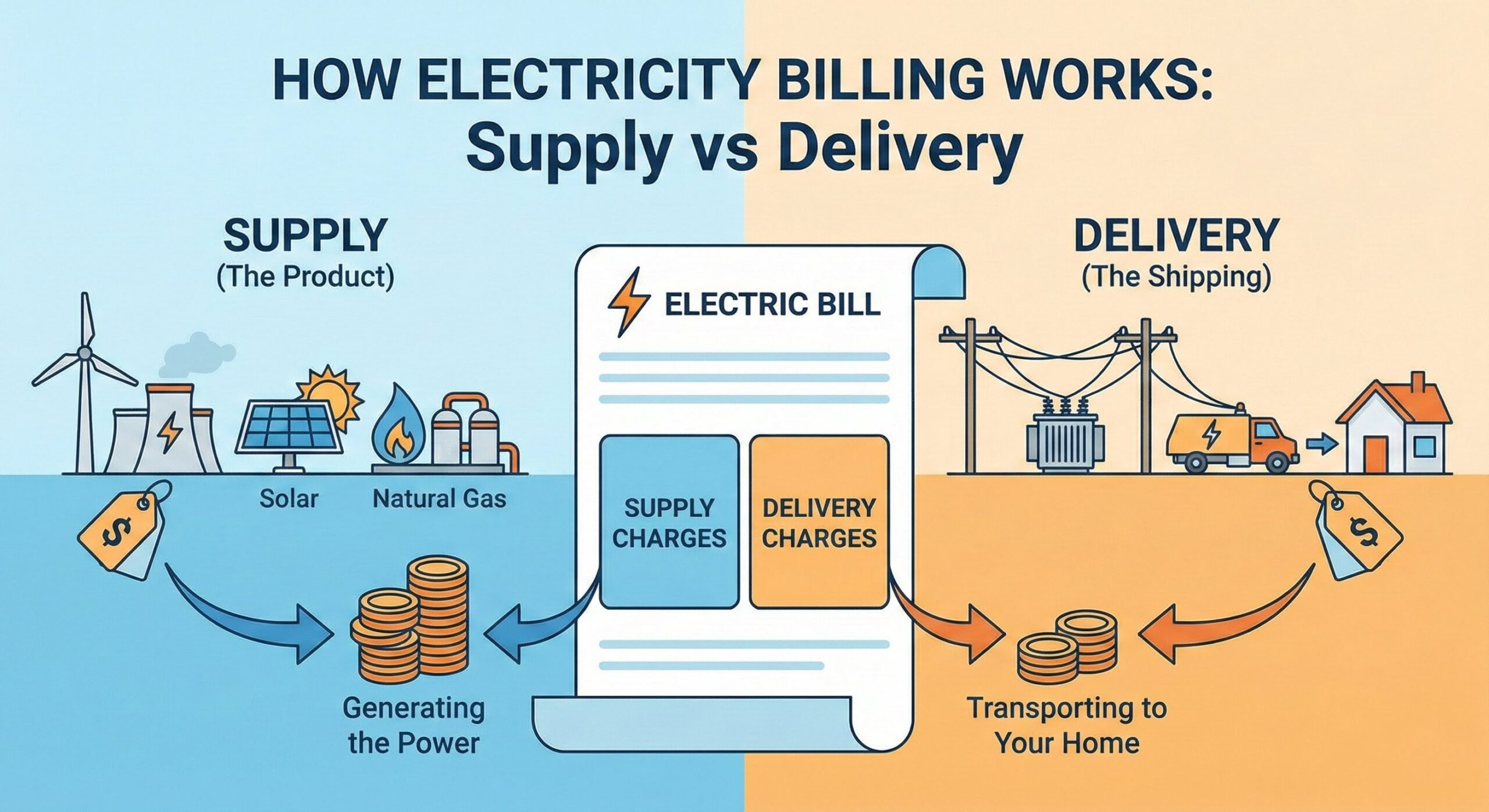
Before you call the power company to yell at them, you need to understand the two moving parts of your bill.
1. The Price (The Rate):
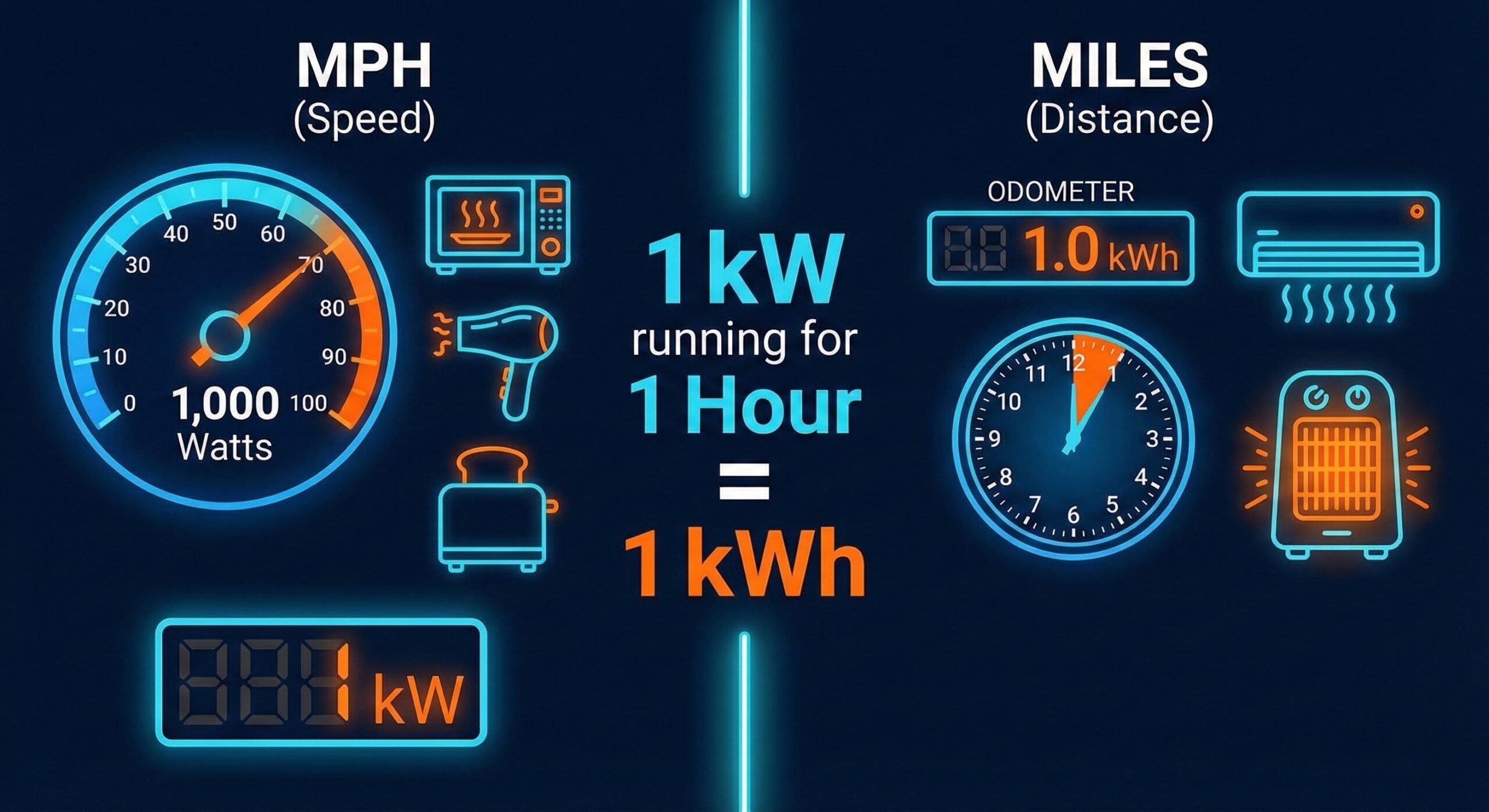
In 2026, the national average electricity rate rose to about 18 cents per kWh.
- The Kicker: In high-demand states like California or Massachusetts, rates are hitting 30¢–40¢+. If your rate went up by even 2 cents, a standard month of usage instantly costs $20 more without you flipping a single extra switch.
2. The Volume (The Usage):
This is the amount of energy you actually consumed.
- The Trap: We are terrible at estimating our own behavior. We think, “I didn’t use the AC much,” but your smart thermostat data might show it ran for 9 hours a day during that heatwave last week.
Bill Buster Tip: Look at the “Average Daily Temperature” on your bill. If this month was 5°F hotter than last year, your AC worked 20% harder just to keep the house at the same temperature.
3. The 2026 “Napkin Math” (Where did the money go?)
Let’s break down a realistic $250 bill spike using 2026 average costs.
Scenario: A family in a standard 3-bedroom home.
- Normal Bill: $160
- This Month: $250 (+$90 Increase)
The Likely Culprits:
The Verdict:
| Culprit | What Happened? | Estimated Cost Impact |
|---|---|---|
| The “Vampire” HVAC | Dirty filter + extreme weather (Heat/Cold). | +$45.00 |
| The “Silent” Heater | A space heater ran for 8 hours/night. | +$64.00 |
| The Guest Effect | 2 guests stayed for a week (Showers + Laundry). | +$25.00 |
| The Rate Hike | Utility raised rates by 2¢/kWh. | +$18.00 |
| The Dying Fridge | Compressor failing (running 24/7). | +$15.00 |
Usually, it’s a combo. A rate hike (+$18) plus a cold snap where you used a space heater (+$64) explains the sudden jump perfectly.
What you should do: Check your kWh usage column. If usage is flat but the bill is high, it’s a Rate Hike. If usage spiked, it’s a Behavior/Appliance issue.
4. The “Hidden” Suspects
If your usage spiked and you swear you didn’t run the AC, look for these invisible thieves.
Suspect A: The “Estimated” Bill
Sometimes, the meter reader skips your house (weather, locked gate, or laziness). The utility “guesses” your usage based on last year.
- The trap: If they underestimated you for 2 months, the 3rd month will be a “True-Up” bill where you pay the difference all at once.
- Check: Look for the word “EST” or “Estimated” next to the meter reading on your bill.
Suspect B: The Broken Water Heater
An electric water heater has two heating elements. If one burns out, the other works double-time to heat the water, running constantly.
- Symptom: You run out of hot water faster than usual, but the bill is huge.
Suspect C: The “Vampire” Load
Gaming consoles, DVRs, and “Smart” TVs never truly turn off. They sit in “Standby” mode, sipping power.+1
- Cost: In 2026, these “always-on” devices cost the average home $100–$165 a year.
What you should do: Go to your electric meter right now. If everything in the house is “off” but the disk is spinning fast (or the digital numbers are climbing rapidly), you have a hidden appliance running.
5. Smart Tools to Catch the Thief
Stop guessing. Use technology to see exactly what is happening.
1. Sense or Emporia Vue Energy Monitor ($150)
These install in your breaker panel. They can tell you: “Your dehumidifier in the basement is costing you $40/month.”
- Why buy: It pays for itself in 3 months by finding waste.
2. Thermal Leak Detector ($30)
Point this at your windows and doors.
- Why buy: If you see a blue spot (cold air), you are paying to heat the neighborhood. A $5 tube of caulk can fix it.
3. Utility App (Free)
Most power companies (PG&E, Duke, ComEd) now have apps that show hourly usage.
- Why check: If you see a spike at 2 AM every night, it’s likely your electric water heater or a programmed pool pump.
6. FAQ
Q: Why electric bill increased when I wasn’t even home?
A: This is almost always an appliance malfunction. A “stuck” relay on a water heater or a fridge with a broken seal can run 24/7. Also, check for “Estimated” readings on previous bills—you might be paying for a “True-Up” from months ago.
Q: Do space heaters actually save money?
A: Rarely. Electricity is the most expensive way to create heat. Running one 1,500-watt space heater costs roughly 27¢ per hour (at 18¢/kWh). Running it for 10 hours a day costs $81/month. Unless you turn your central furnace way down (to like 60°F), space heaters usually increase your bill.
Q: Can a neighbor steal my electricity?
A: It’s extremely rare in single-family homes, but possible in duplexes or apartments with shared basements. If you suspect this, turn off your Main Breaker. If the meter keeps moving, someone else is tapped into your line.